
Frozen by the exchange or seized by law enforcement: telling the two apart
Published: Last reviewed: How we edit
A compliance freeze happens when a platform acts under its own rules. A seizure or legal freeze happens because a court, prosecutor or other authority ordered it. The notice usually shows which one you are facing: check for a case or order reference, the name of an authority, and wording saying the platform cannot discuss it. Each has its own path to release, and a legal order usually calls for a lawyer.
Not sure what to do next? Write to us:
Two different decision makers
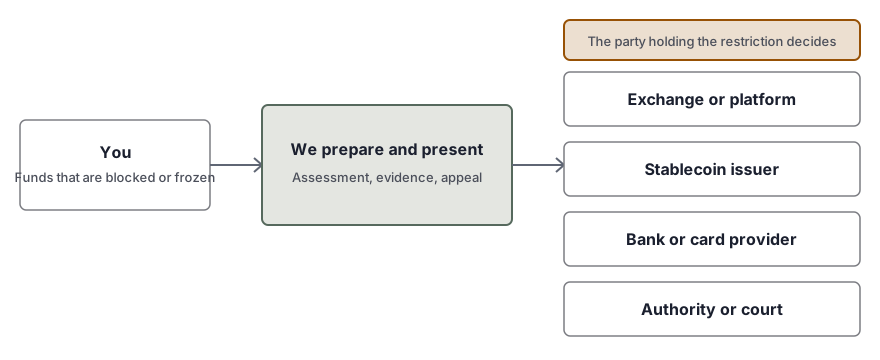
With a compliance freeze, the platform makes the call itself. It limits the account while reviewing identity, where funds came from, or a risk flag. With a legal freeze or seizure, an outside authority makes the call, and the platform simply follows the instruction.
On your account screen the two look the same: withdrawals are turned off and support replies briefly. What differs is who has the power to lift the restriction.
Signs that point to each type
No single sign settles it. Read the full notice and every reply.
- A compliance freeze: the message asks for documents, mentions a review or verification, and tells you how to reply.
- When an exchange freezes funds because of a legal order, the message you see usually mentions a case number or an authority. It will not explain much beyond that.
- A compliance freeze usually gives you a clear next step. A legal one often gives none, because the platform may not be permitted to explain.
- If support says they cannot comment or cannot see the reason, that usually points to a separate team, or an authority, being involved.
- A letter, email or call from an investigator or an authority points to a legal route. Take it seriously, and check who actually sent it.
Why the two differ
Some freezes come from the platform's own compliance team. Those can often be cleared by providing what they request. But a legal order sits above the exchange entirely. No amount of extra paperwork sent to the platform will alter it. It may simply push back the step that actually matters.
Hearing from an authority also has legal weight. Whatever you say or send could be used in a case, so do not improvise answers. The small step for now: write nothing until you have had it reviewed.
What each path looks like
A compliance freeze follows a paper trail, step by step. First, answer precisely what was asked. Next, send documents that back up where the funds came from. If that first reply is turned down, take the next small step: file through the official appeals channel. We can help you keep it calm and organized, one piece at a time.
If the freeze or seizure is a legal one, the way forward runs through the authority or the court. That usually means working out which authority issued the order, what grounds it rests on, and what process exists to challenge it or to request a release. Deadlines can apply, and they vary from one jurisdiction to another. A first small step is to gather any notice or letter you received, so we can see who sent it.
When a lawyer should step in
If a legal order or an investigation might be involved, talk to a qualified lawyer in the relevant jurisdiction soon. A lawyer can read the order for you, explain your rights and any deadlines, and deal with the authority on your behalf.
We are not lawyers and do not offer legal advice. What we can do is sit with you and sort out which path your case is on, help gather your evidence, put the file in order, and connect you with independent licensed lawyers. Lifting an order is beyond what we can do. And please note: we will never ask for your seed phrase, private keys or passwords.
Questions people ask
Can an exchange claim a freeze came from law enforcement?
Not always. Some orders forbid the exchange from telling you anything. If the platform says it cannot discuss the matter, ask calmly if a legal team is reviewing the case. Save their written reply.
Is it possible to have my funds released after a seizure?
That depends on where your case sits and which laws apply. Getting funds released usually takes two things: proof that the money is lawfully yours, and a formal process with the authority or a court. A lawyer licensed in that country is the right person to walk you through it.
Is it okay to reach out to the authority on my own?
This is stressful, and it is also fixable in stages. Seek legal advice as soon as possible. Everything you communicate might be used later in any legal process. If an authority reaches out to you, verify their message independently. Find their official contact details on your own.
What can I do if I am not sure what kind of freeze it is?
Write to the platform and ask what the restriction rests on, and who you should contact. Then show the notice to a specialist for a free assessment. We can help you read the signs, but the final call belongs to the platform.
How we can help
- Find out who froze your crypto. Learn who is behind the freeze and which next steps are realistic.
- When authorities freeze your crypto. Your crypto is held by authorities. We connect you with independent lawyers. We cannot give legal advice.
- Getting an exchange account unblocked. Learn what the exchange is asking, gather KYC and AML evidence, then answer and appeal.
- Regulator and ombudsman complaints for crypto issues. Organize a clear timeline for your complaint to a regulator, ombudsman, or consumer agency.
This page gives general information only. It is not legal advice.