
Sanctions and AML false positives explained: why a wrong match occurs
Published: Last reviewed: How we edit
A sanctions or AML false positive is an alert that incorrectly ties you, or your wallet, to a sanctioned individual or a risky source. It often traces back to a similar name, a shared date of birth, or an address that touched a flagged service. A reviewer checks your identity data against the listed entry. If the two do not match, you can request that the alert be cleared. We do not assist anyone in evading genuine sanctions.
Not sure what to do next? Write to us:
What a false positive really means
Banks, exchanges and card providers run software that checks customers and transactions against sanctions lists and risk rules. That software leans toward raising alerts, because overlooking a genuine match is costly for the company.
A human reviewer clears most alerts. A false positive is one that turns out not to involve you. Your account can remain restricted during the review, and that is why it feels like an accusation even though it is a routine step.
When your name or address is mistakenly flagged
Several everyday causes produce wrong matches. They happen often and reflect nothing about you as a person.
- A name that looks like yours: common names, and spellings that vary across alphabets, can line up with a listed person.
- Details that overlap: sharing a birth year, a nationality or a city can push the score up even when the person is someone else entirely.
- Names written in several ways: transliteration can turn one person into duplicate or near-matching entries.
- Wallet exposure: funds you received came from an address that analytics tools tie to a sanctioned or risky service, even though you had no idea.
- Outdated records: a list entry or cluster label may have changed, yet the screening tool still shows what it used to say.
Telling a real match apart from a mistake
It can be difficult to track these technical steps. Please compare your identification details with the entry provided. Check your name, birth date, and identifiers; if several of these vary, the system registers a weak match.
With addresses, the question shifts. Did your funds truly move to or from the flagged service, and how many steps separated you? A direct link is a much harder problem than one sitting four or five hops away.
Take an honest look at the facts first. If you truly are the listed person, or you knew you were dealing with a sanctioned party, this guide is not for you, and no lawful path exists to work around that.
Steps to contest a flag
A challenge works well when it stays short, factual and pinned to the evidence. The reviewer is working through a checklist, not weighing how you feel about the wait.
- Ask the company, in writing, which check triggered the alert and what they need from you.
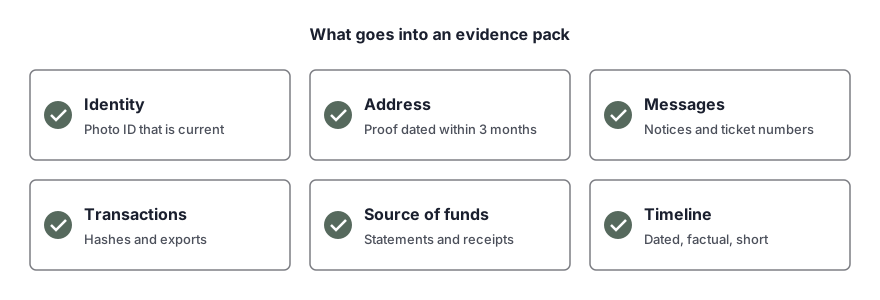
- Share a legible copy of your ID, plus your proof of address and place of birth if they apply.
- In a few short sentences, explain why your details differ from the listed entry, and attach the proof.
- If a wallet was flagged, provide a transaction history plus documents showing where the funds came from.
- Hold on to the ticket number, and use only the official channel for all your messages.
What we handle, and what stays with others
If you were matched by mistake, we help you organise the evidence and write a clear, plain challenge. Independent specialists look over the transaction trail, and where it is needed, independent licensed lawyers advise on the legal route.
If a restriction is real, we step back. We do not assist with dodging true sanctions, masking a legitimate match, or routing money around a block. No service can compel a company to remove a flag, and we will never request your seed phrase, private keys, or passwords.
Questions people ask
Does getting a sanctions alert mean I am actually on a sanctions list?
No, an alert simply means the software detected a possible match. A reviewer then checks this finding manually. Most alerts are cleared when the company confirms your personal data, such as name and date of birth, does not match the flagged entry.
What is the usual waiting time for a sanctions review to finish?
That varies by company and by how complicated the match is. A simple name match can often be cleared quickly once you send in the requested documents. A case that touches an old address or a request from a regulator may need far more time. The next small step is to check exactly which documents the company asked for.
While the alert stays open, can I still take my funds out?
Often, no. Companies commonly pause withdrawals while the review is still open. Ask what choices you have, such as sending the funds back to where they came from, and leave them in place for now instead of moving them anywhere else.
Is it possible to get my name off a sanctions list?
No. We cannot take anyone off a sanctions list. What we can do is help you prove to a company that the match is not about you. Getting removed from an official list is a different step. That requires a lawyer who works in the country where the list is held.
How we can help
- Support with sanctions and AML false positives. Sanctions or AML flag by mistake: an evidence pack plus a statement filed by a lawyer.
- Packs for source of funds and wealth. We can help you compile clear documentation showing your source of funds and wealth for banks and exchanges.
- Disputing wallet risk flags and screening results. Flagged as high risk by a screening tool: trace the funds and dispute the label.
- Find out who froze your crypto. Learn who is behind the freeze and which next steps are realistic.
This page gives general information only. It is not legal advice.