
P2P crypto trades and frozen funds: what causes it and ways to lower the risk
Published: Last reviewed: How we edit
Money from P2P trades gets frozen when your counterparty or the source of the payment is linked to activity like fraud. Banks or exchanges hold accounts during investigation. You may have done nothing wrong. Keeping a clear record of the trade, the other person, and where the funds originated is your most useful tool for resolving the hold.
Not sure what to do next? Write to us:
Even a clean trade can end in a freeze
When you trade peer to peer, you are swapping cash for crypto, or crypto for cash, with someone private. Although you only see a username, the money moves through a bank or payment app which you do not control.
If the money you received came from a scam, a stolen account or a disputed transfer, the paying bank can be ordered to freeze it. That hold can travel with the funds, landing in your account or the next account that receives them.
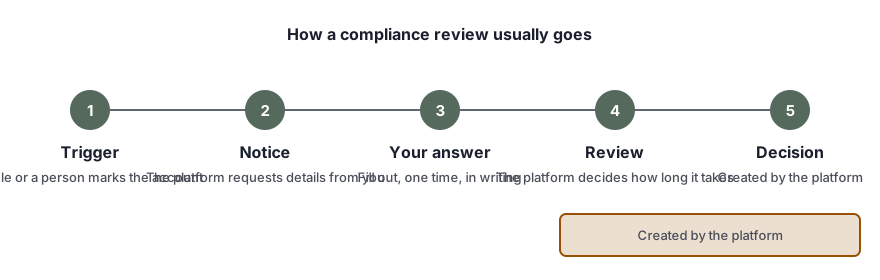
Understanding which groups are involved when funds are frozen
Multiple organizations may restrict access to your funds, and each has their specific set of rules.
- Your bank or payment provider, which may hold incoming payments or close the account once someone complains.
- The bank of the person on the other side, which can send a recall or a fraud report to your bank.
- While a dispute is being reviewed, the P2P platform can hold the order, the listing and the wallet.
- The exchange that receives the crypto, which can limit an account after a risk flag appears.
- Law enforcement, if a complaint about the funds has been filed by a victim.
What a freeze looks like day to day
One common pattern: a bank account gets restricted after several incoming payments from different people. The bank then asks what the payments were for, and how you know each sender.
Another pattern shows up on P2P platforms. They hold the crypto in escrow when one side opens a dispute. The funds can stay locked until the platform decides, and it may not share the reasons in detail.
How to document a trade that was legitimate
A clear file makes the reviewer's answer easy. Save your records while the trade is fresh, not weeks later.
- The P2P order page or chat, with the price, amount, time and the counterparty's username visible.
- The line on your bank statement that matches the trade, including the payer's name exactly as shown.
- The transaction on the wallet or exchange, showing the crypto either leaving or arriving.
- Your identity document, plus proof that the payment came from an account held in the counterparty's own name.
- Evidence of where your own funds or crypto came from before the trade, for example earlier statements or receipts.
How to lower the risk next time
Use platforms that offer escrow and identity checks, and choose counterparties with a verified track record. Accept payment only from an account in the buyer's own name, and never take payments from third parties.
Keep your trades modest and consistent with your usual profile. Avoid breaking a large amount into many small ones, since that pattern tends to attract attention. Never give a counterparty your seed phrase, private keys or banking passwords, and never move trade chats off the platform's channels.
Where we can help
If a freeze follows your P2P trades, we will review your case at no cost. We help you collect the records, write a plain account of each trade and get the reply ready for the bank, platform or exchange. Independent licensed lawyers step in when a legal route exists.
The bank or platform makes the call. We cannot push them to release it. We never request your seed phrase, private keys, or passwords.
Questions people ask
If I got money through a P2P trade, could I still lose it?
Yes, it can happen. It is unsettling, even when you did nothing wrong. If a payment you received is later tied to fraud, the bank is allowed to pull it back or hold it, even if you had no idea. Solid records and a clean trade history help show you acted in good faith.
My bank froze my account after P2P payments. Why does that happen?
Banks flag patterns: lots of incoming transfers from people who have nothing to do with each other, or a payment someone has reported as fraud. Until they understand what the money was for, the account stays restricted. Explaining each payment plainly, with proof attached, is the usual path forward.
Is P2P trading against the law?
No. P2P trading is legal in many places. The rules are different in each country and on each platform. Check your local laws and the platform's terms. Keep your records. That way, you can explain each trade if someone asks.
What can I do when the P2P platform has frozen my crypto?
First, open a ticket through the platform's official channel. Include your order reference and your proof of payment, then save every reply you get. If that first answer leaves you unsure, the next small step is to push it up through the platform's appeals process.
How we can help
- Support for frozen P2P trade funds. If your bank or exchange blocked money after a P2P trade, write down the trade details and file an appeal.
- Packs for source of funds and wealth. We can help you compile clear documentation showing your source of funds and wealth for banks and exchanges.
- Blocked crypto card or payment account help. Card, neobank or processor account frozen? Find what triggered it, gather proof, then appeal.
- Find out who froze your crypto. Learn who is behind the freeze and which next steps are realistic.
This page gives general information only. It is not legal advice.