
P2P deal, funds on hold: bank and exchange freezes, and how to keep records of the trade
Published: Last reviewed: How we edit
This is stressful, and it is okay to breathe. Funds sometimes get frozen after a P2P trade. This may happen if your counterpart is reported for fraud or if a bank flags your payment as risky. This situation can happen even if you did nothing wrong. The main way forward is to prove the trade was real. We help you organize your chat logs and receipts. This documentation is needed for the appeals process.
Not sure what to do next? Write to us:
Everyday situations
- The bank has frozen the account that got the P2P payment
- If coins were acquired from a reported scammer, the exchange may have frozen them.
- The other party's bank has filed a chargeback or recall request after the trade had already gone through
- The other party says the payment was sent in error, or that they were pressured into making it
- A run of small P2P trades made close together, marked as unusual activity
- Money frozen because of police investigation into the other person's account
This fits if you
- Your bank account was frozen after money arrived from a P2P crypto buyer
- A P2P seller you bought crypto from was later reported, and now your exchange account is restricted
- A bank or a police officer told you the incoming payment is tied to a fraud complaint
- You sold crypto honestly, and now the buyer's bank wants that payment reversed
- You are unsure how to show the trade was real and the payment was fair
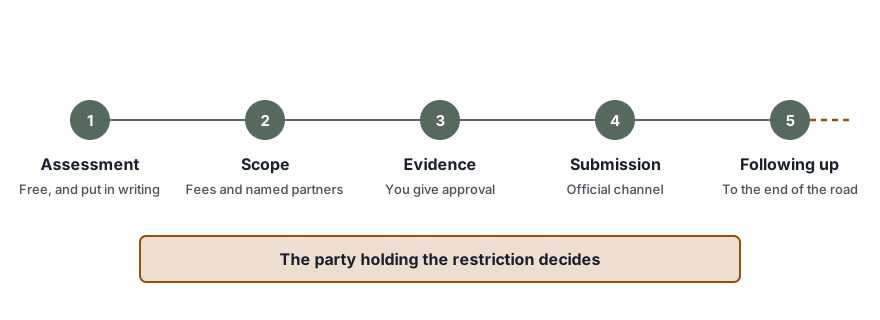
How the case runs
- No-cost evaluation
You inform us about what was frozen, who did it, and how the trade went. We write back to you to say if we can help and what the likely route is.
- Scope and fee in writing
Before you pay, we will send you the scope, the fee structure, and the names of the independent specialists who will do the writing work.
- Gathering Your Documentation
Send your chat logs, receipts, bank statements, and platform records through a secure channel. We review them for missing pieces or conflicting information before moving forward.
- Appeals and disputes
The appeals are filed through the bank's and the exchange's official channels. You get copies of everything, along with the reference numbers.
- Following up
We follow each reply as it comes in, help you answer follow-up questions, and say plainly when a case has reached the limit of what can be done.
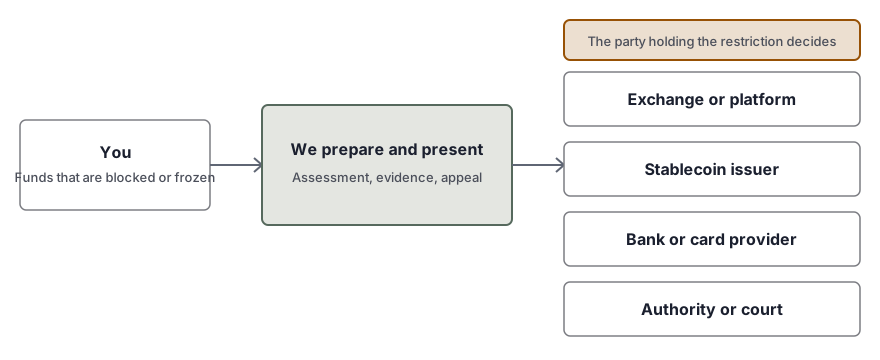
What we do
- Figure out who put the freeze on, and why
A freeze from a bank, from an exchange, or from police each follows its own rules, and each has its own way out. We go through the notices with you and work out who is holding the funds, and what kind of request sits behind it.
- Piece the trade back together
First, we sort out how the P2P trade actually went: the advert you replied to, the chat with the counterparty, the price you both agreed on, the proof that payment arrived, and the moment the coins were released. Written down with dates, this sequence shows clearly that a real trade took place.
- Show you acted in good faith
We help gather evidence of normal activity. We check market rates, your identity checks, platform records, and your prior history. One trade looks very different when part of a clean pattern.
- Write appeals to the bank and exchange
We draft a short, factual appeal for each party. This includes quotes from the reference number, attached evidence, and requests a specific outcome.
- Bring in lawyers when needed
This situation can be stressful. If the bank or regulatory body does not help, we coordinate independent legal action. We manage the paperwork and keep all aspects of the case coordinated.
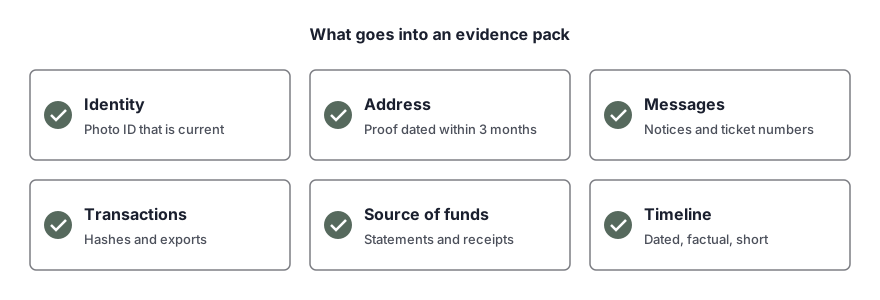
What to have ready
- A government-issued photo ID and a document proving your address
- Screenshots or an export of the P2P advert, plus the full chat with the counterparty
- Payment proof from your bank or payment app, showing the date and the amount
- The order record from the P2P platform, together with the release confirmation
- Exchange history that shows which coins you received or sent
- The notice you got from the bank or exchange, including its reference number
- Your earlier P2P or trading record, so reviewers can see normal behaviour
- A brief written timeline of the trade, step by step
What we cannot do
- We cannot make a bank, an exchange or the police release funds. They decide on their own, under their rules and the law that applies to them.
- No outcome is promised here, and no timeline either. A payment held in connection with a fraud inquiry can remain on hold for quite a while.
- We will not assist with changing or inventing evidence, or with concealing a genuine connection to fraud.
- Your seed phrase, private keys and passwords stay private. We do not ask for any of them.
Questions people ask
I only did a regular P2P trade, so why is my money frozen?
Banks and exchanges look at the accounts around any payment. If the person you traded with was reported for fraud, or if their account is being reviewed, your payment can land under the same hold, even though you acted honestly. After that, it falls to you to show the trade was real.
What evidence carries the most weight in showing the trade was genuine?
A dated sequence carries the most weight: the advert, the complete chat, the price you agreed on, proof of payment and the release of the coins. Include the platform's order record plus your own trading history. Missing or edited chat logs work against you.
Could the bank of the other side take the funds back?
In certain cases a bank can recall or reverse a payment when the sender says it was sent by mistake or through fraud. Your reply should set out the evidence of the trade. If a large amount is claimed back, a lawyer may be needed.
Should I try to shift the coins or the cash somewhere else?
No, please don't. Funds that are under review look worse if they move, and a transfer can read as an attempt to hide them. For now, leave the account untouched, answer what is asked of you, and save every message you send or receive.
Is a freeze at a bank different from a freeze on an exchange?
A bank freeze covers your fiat money. It usually follows a fraud report, a court order, or the bank applying its own risk rules. An exchange freeze covers your coins and usually comes from a compliance review. Each one has its own appeal path, and sometimes both apply at once.
Do I need a lawyer?
Often not right away. It makes sense to bring one in if the bank or authority ignores the appeal, if a recall claim is filed against you, or if the amount involved is large. The legal steps are handled by independent licensed lawyers, and we will tell you when that point arrives.
How long it takes
Reviews by banks and exchanges can run for weeks, and a hold connected to a police inquiry can take longer still. After the assessment we provide an estimate, and we update it as your case moves along.
Fees
The assessment costs nothing. After that, you get a written scope and a fee model matched to your case type. We won't ask you to pay anything before we have told you if we can help. Fees →
Related situations
- Getting an exchange account unblocked. Learn what the exchange is asking, gather KYC and AML evidence, then answer and appeal.
- Packs for source of funds and wealth. We can help you compile clear documentation showing your source of funds and wealth for banks and exchanges.
- When authorities freeze your crypto. Your crypto is held by authorities. We connect you with independent lawyers. We cannot give legal advice.
- Blocked crypto card or payment account help. Card, neobank or processor account frozen? Find what triggered it, gather proof, then appeal.
Read next
Sources
These are the official or authoritative pages behind this page. Sources get updated over time, so check them for the current wording.
This page gives general information only. It is not legal advice.