
When a DeFi exploit, bridge hack or bad approval takes your funds: what real steps can help you start
Published: Last reviewed: How we edit
When crypto leaves your wallet on-chain, the transfer is permanent. Most DeFi exploits, bridge hacks and malicious approvals end with the funds gone. A few cases open a narrow window: stolen assets may reach an exchange, a stablecoin issuer like Tether or Circle, or a protocol that can pause activity. A fast, clean trace matters there. We help you follow the flow, alert the right parties and file proper reports. No return of funds can be promised.
Not sure what to do next? Write to us:
Everyday situations
- After connecting to a fake website and approving a token spend, your wallet was emptied
- Funds in a liquidity position gone after a protocol was drained by an exploit
- Assets lost or stranded in a cross-chain bridge attack
- The team pulled out the liquidity and vanished, and your tokens are stuck
- A token or NFT you touched carried a hidden approval and took control
- The funds that were taken have shown up at an exchange deposit address
- Your wallet was breached, and the attacker is already moving assets through swaps
This fits if you
- A malicious contract or approval was used to drain your wallet through a transaction you signed
- Money went missing after an exploit hit a DeFi protocol or a cross-chain bridge
- A phishing site or fake airdrop got you to grant token permissions
- A clean trace, plus a written report you can hand to exchanges, protocols, or the police
How the case runs
- No-cost evaluation
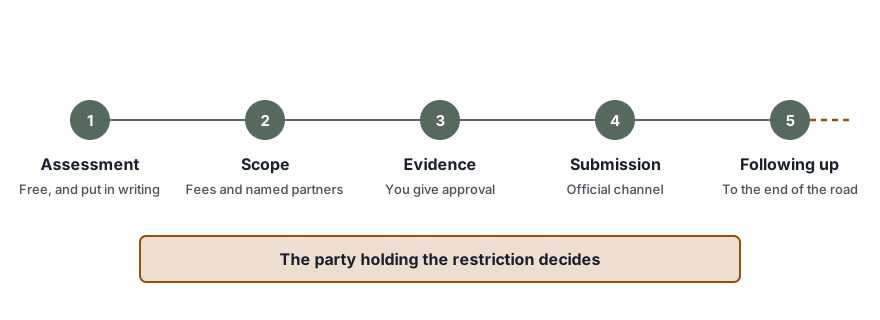
Start by telling us which contract you approved, the date it happened, and every wallet address connected to it. We will answer in writing, and we will be straight with you about whether a trace has anywhere to go and whether this is something we can help with.
- Fees and scope, in writing
Once we move forward, you get a written scope, the fee structure, and the names of the independent analysts who will trace the funds. No payment is due until you approve it.
- Follow the trail
Analysts trace where the funds went. You get a plain summary of the route, the spots where money might still be reachable, and the spots where it is gone for good.
- Notices and reports
We file the alerts and put together the report for the authorities. Copies of everything we send, plus any reference numbers that come back, go straight to you.
- Check, then pause the damage
We tell you what came back in plain words, and when nothing more can be moved forward, we say so plainly. We will not leave a file open just to keep billing you. Once the work has gone as far as it can go, we close it and explain why.
What we do
- Protect what remains
Together, we go through revoking token approvals, then moving whatever is left into a fresh wallet that you set up yourself, on your own device. We never need your keys or a seed phrase, so please never share them with anyone.
- Follow where the assets went
Independent analysts trace the funds out of your wallet, across swaps, bridges and mixers, watching for places where movement slows: exchange deposits, stablecoin holdings, or contracts that are frozen.
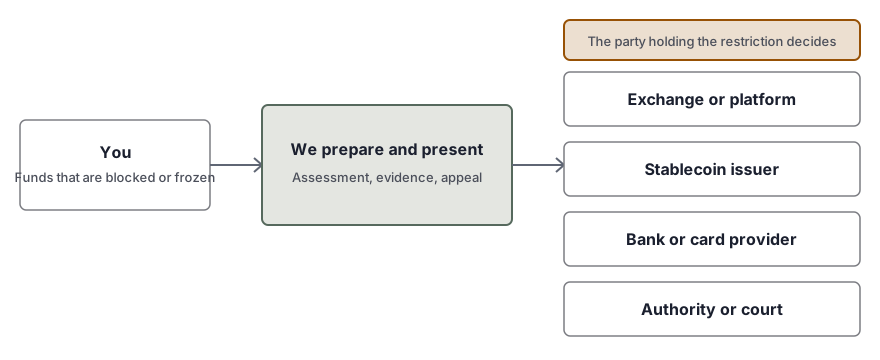
- Notify exchanges, issuers and protocols
If the trail points to a destination that can actually act, we put together a plain notice: the transaction hashes, the wallet addresses, and a brief summary of what happened. We send it to whichever exchange, issuer or protocol team has the ability to pause or flag the funds.
- Prepare a report for authorities
Next, we pull the incident together into a factual report: a timeline, a loss figure and the evidence. You can take it to a police report or a cybercrime unit complaint, where such a unit exists in your country.
- Look at legal paths together
When the person behind the attack can be named, or a company is part of it, we bring in an independent lawyer. That lawyer can advise on claims, court orders and steps across borders. The legal work runs under the lawyer's own engagement, not ours.
What to have ready
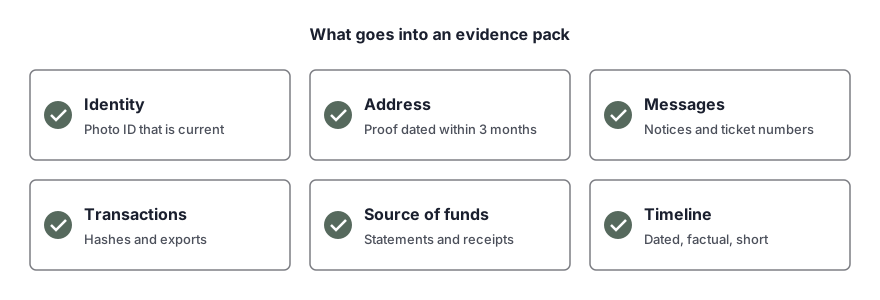
- We track several addresses: your specific wallet, the relevant contract, and the attacker’s wallet if that is known.
- Transaction hashes for the approval, the theft itself, and any movement afterwards
- Screenshots of the site, message, or app that talked you into signing
- Exchange or wallet app history that shows what your balances were before the loss
- Any chat logs or emails you have with the project, with support, or with the attacker
- Proof of where the lost assets came from, when you have it
- A written timeline covering first contact up to when you found the loss
What we cannot do
- On-chain transfers cannot be undone. We have no way to reverse a transaction, and no power to make an exchange, issuer or protocol freeze or hand back assets.
- For most DeFi and bridge cases, recovery is unlikely. We cannot promise a result and we turn down cases with no real path forward.
- We do not hack back, strike at attackers, or negotiate with them for you.
- Nobody from our side will ever request your seed phrase, private keys or wallet passwords.
Questions people ask
Is it possible to get back funds taken in a DeFi hack?
Sometimes, though not often. There is mainly a chance when stolen assets land on an exchange or with a stablecoin issuer that can act, or when the protocol negotiates a return. Most stolen funds get swapped or mixed fast, and those are usually gone.
Can a blockchain transaction ever be undone?
No. Once a transfer is confirmed on-chain, nobody can undo it, and that includes us. Getting anything back depends on third parties who may freeze or return assets, and they decide on their own terms.
What comes first after I signed a malicious approval?
Revoke that approval with a tool you trust, then move whatever is left to a fresh wallet set up on a clean device, and keep the transaction hashes saved somewhere safe. Never follow recovery offers that arrive from strangers. Most of those are scams.
Why do you keep warning about recovery scammers?
After a loss, fake recovery services often reach out, asking for an upfront payment or your seed phrase. Genuine help will never request your keys. We never promise an outcome either.
Is a bridge hack a different situation from a wallet theft?
It is. With a bridge hack, losses usually land on many users at once, and the project may set up its own recovery or compensation plan. The sensible move is to stay on official project channels and keep proof of what you held.
Should I go to the police?
In most cases, yes. A police report can help with later requests to exchanges, and it can support insurance or tax claims. Bring a clear timeline, the addresses and the hashes. How cybercrime units respond varies from country to country.
How long it takes
The first hours count, though tracing and follow-up work can stretch over weeks. How fast exchanges and protocols reply differs from case to case. You get an estimate after the assessment, and we update it if anything changes.
Fees
The assessment costs nothing. Once it is done, you receive a written scope plus a fee model for your situation. No fee is requested before we have told you whether we can help. Fees →
Related situations
- Tracing stolen crypto and requesting freezes. Follow stolen crypto, ask exchanges and issuers to freeze it, and file a police report.
- Reading a blockchain analytics report. A traced source-of-funds report, written for a compliance team to use.
- When authorities freeze your crypto. Your crypto is held by authorities. We connect you with independent lawyers. We cannot give legal advice.
Read next
Sources
These are the official or authoritative pages behind this page. Sources get updated over time, so check them for the current wording.
This page gives general information only. It is not legal advice.